Electrolytes for Gym Training: Do Lifters Actually Need Them?
Quick answer: If you lift for an hour in a cool gym and eat normal meals, water is usually enough. Electrolytes earn their place when you sweat heavily: long or hot sessions, training twice a day, cardio on top of lifting, or if you finish sessions with salt marks on your clothes. Sodium matters most, because it is the main electrolyte you lose in sweat.
What electrolytes are
Electrolytes are minerals that carry an electrical charge when dissolved in body fluids. The main ones are sodium, chloride, potassium, magnesium and calcium. Your body keeps their levels in a tight range, and your kidneys do most of that work day to day. Sweat is the main way training changes the picture.
| Electrolyte | Why it matters | Lost in sweat? | Food sources |
|---|---|---|---|
| Sodium | The main electrolyte in blood and the fluid around your cells | Yes, the biggest loss: roughly 10–70 mmol per litre of sweat | Salt, bread, cheese, cured meats, stock |
| Potassium | The main electrolyte inside your cells | Small: about 2–8 mmol per litre | Potatoes, bananas, beans, yoghurt |
| Magnesium | A mineral you get mainly from everyday food | Trace amounts only | Nuts, seeds, wholegrains, leafy greens |
| Calcium | Mostly stored in your bones and teeth | Trace amounts only | Dairy, fortified plant milks, tinned fish with bones |
How much do you actually lose?
It varies a lot from person to person. A 2017 review of sweat testing in athletes found sweat rates typically run from about 0.5 to 2.0 litres an hour, and whole-body sweat sodium from about 10 to 70 mmol per litre. That works out at roughly 230mg to 1,600mg of sodium in every litre of sweat. A light sweater in a cool gym might lose a few hundred milligrams in a session. A heavy, salty sweater doing a long session in a hot room can lose several grams.
Potassium losses are much smaller (about 2–8 mmol per litre), and the same review treats magnesium and calcium as trace minerals in sweat. That is why a good electrolyte drink is built around sodium, with other minerals in supporting roles.
Do lifters need electrolytes?
Most strength sessions involve rest periods and lower sweat rates than running or cycling, so many lifters do fine on water and normal meals, which already contain salt. The American College of Sports Medicine (ACSM) position stand recommends drinking to avoid losing more than 2% of body weight from water deficit, because performance can suffer beyond that. It also notes that drinks with electrolytes and carbohydrate can beat plain water in certain situations, and that sweat losses vary so much that hydration plans should be personal.
Electrolytes are worth using when:
- Your sessions run past about 60–90 minutes, or you add cardio after lifting.
- You train in a hot or poorly ventilated gym, or in summer.
- You train twice a day and need to recover fluid between sessions.
- You are a heavy or salty sweater (white salt marks on dark clothing after training).
- You are cutting and eating less food, and so less salt, than usual.
- You wake up and train first thing without having eaten or drunk much.
How to tell your hydration status
You do not need a lab. Three checks cover most people.
| Check | What to look for | What it tells you |
|---|---|---|
| Urine colour | Pale straw is the target; dark yellow and strong-smelling is a warning sign | A quick daily check. Research on urine colour supports it as a practical field estimate, not a precise measure |
| Weigh before and after training | Each 1kg lost during a session is about 1 litre of sweat not replaced | Your personal sweat rate. Losing more than 2% of body weight means you need to drink more during sessions |
| Thirst and symptoms | Thirst, dry mouth, headache, dizziness, tiredness, peeing less often | Common signs of dehydration listed by the NHS |
Some B-vitamin supplements can turn urine bright yellow, so use the colour check alongside the others.
When to use electrolytes
| Situation | What to do |
|---|---|
| Before training | If you are likely to start under-hydrated, drink with a meal or an electrolyte drink a few hours before. The ACSM advises starting several hours out so your body can absorb it and you can pee off any excess |
| During long or hot sessions | Sip an electrolyte drink through the session rather than downing it at the end |
| After heavy sweating | Replace fluid and sodium with a drink, a salted meal, or both |
| Rest days | Food and water are usually enough, unless it is hot or you have a physical job |
Do not overdo the water
More is not always better. A 2015 international consensus statement found that the main cause of low blood sodium during exercise (exercise-associated hyponatraemia) is drinking too much low-sodium fluid. It also found that extra sodium cannot prevent it if you keep overdrinking. Its advice is simple: drink when you are thirsty. This mostly affects long endurance events, but the rule applies in the gym too.
Caffeine and electrolytes
Caffeinated electrolyte drinks count towards your daily caffeine total. The European Food Safety Authority (EFSA) says single doses up to 200mg, and up to 400mg a day from all sources, raise no safety concerns for healthy adults; the daily figure is 200mg for pregnant or breastfeeding women. EFSA also notes that around 100mg can affect sleep in some people when taken late in the day. Do not stack a caffeinated electrolyte with a high-caffeine pre-workout: 150mg plus 362.5mg is 512.5mg, which is over 400mg.
Where DARKSTIMS Electrolytes fit
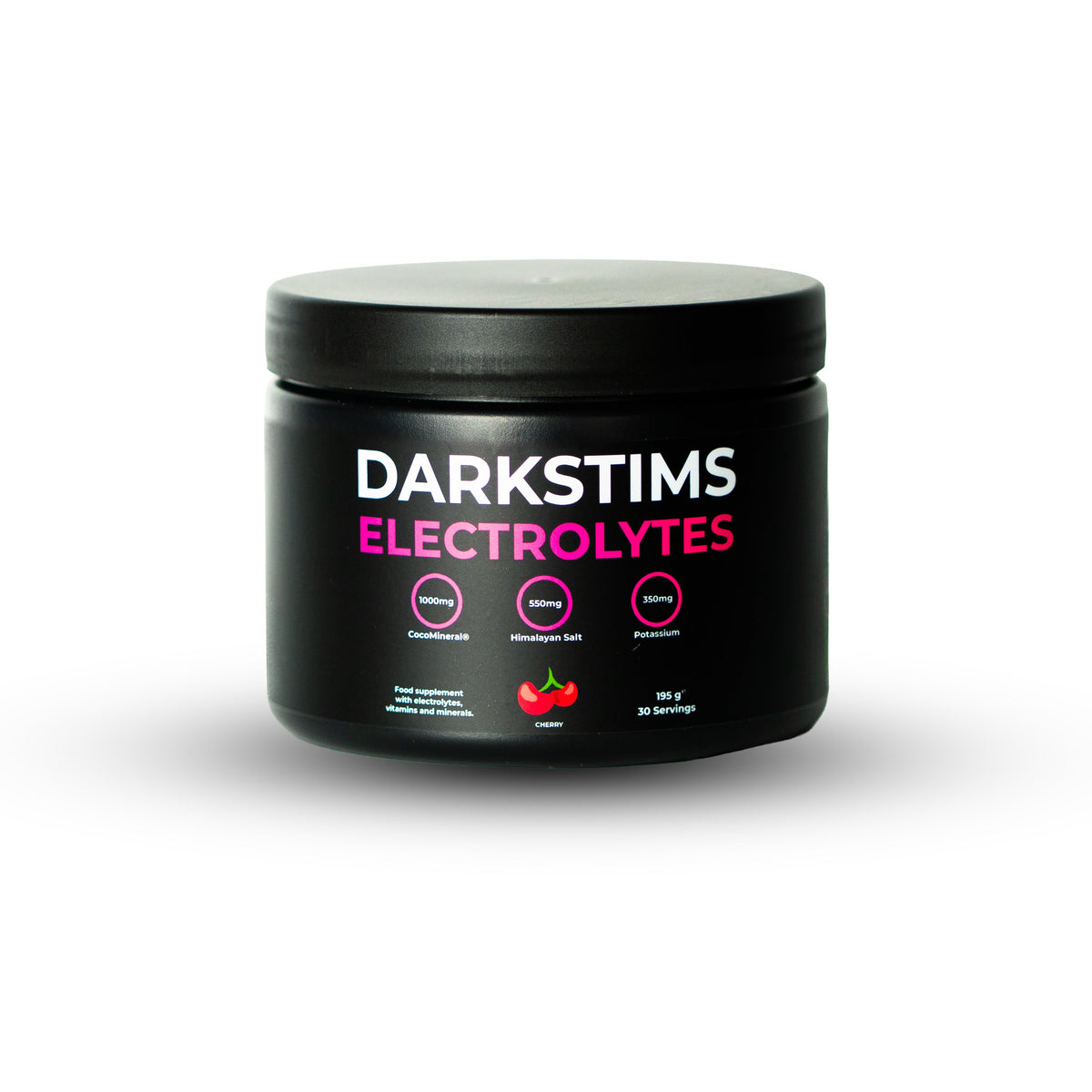
DARKSTIMS Electrolytes is caffeine-free, comes in 11 flavours and gives 30 servings per tub. Each serving lists every ingredient by weight: 1,500mg taurine, 1,000mg CocoMineral coconut water powder, 550mg pink Himalayan salt, 350mg tri-potassium citrate, 250mg Aquamin MG, 150mg magnesium bisglycinate, 125mg calcium lactate, 250mg vitamin C and 2.5mcg vitamin B12. Mineral amounts are given as compound weights, so 350mg of tri-potassium citrate is not 350mg of potassium. Each serving provides over 300% of the nutrient reference value (NRV) for vitamin C and 100% for vitamin B12. Vitamin C contributes to the normal function of the immune system, and vitamin B12 contributes to the reduction of tiredness and fatigue.
DARKSTIMS Caffeine Electrolytes is the electrolyte formula plus 150mg natural caffeine from green coffee beans per serving: one 6.5g scoop in 600–1,000ml of water, 6 kcal and 30 servings per tub. Use it in the morning or before training, not alongside another caffeinated product. Both are in the All-Day Hydration Stack.
FAQ
Can I just add salt to my water?
Yes, a pinch of salt in water replaces sodium, which is the main thing you lose. An electrolyte powder is more convenient and tastes better, and it adds potassium, magnesium and other ingredients in measured amounts.
Should I drink electrolytes every day?
Only if you sweat a lot most days. On light days or rest days, water and normal meals usually cover it. Use the urine colour and weigh-in checks to decide.
Can I drink electrolytes in the evening?
A caffeine-free electrolyte drink is fine at any time. Avoid caffeinated versions late in the day, because caffeine can disrupt sleep.
How much should I drink during a session?
Drink when you are thirsty and aim to finish without losing more than about 2% of your body weight. Weighing yourself before and after a few sessions shows you how much you lose.
Sources
- NHS. Dehydration: symptoms and causes.
- American College of Sports Medicine, Sawka MN et al. (2007). Position stand: Exercise and fluid replacement. Med Sci Sports Exerc.
- Baker LB (2017). Sweating rate and sweat sodium concentration in athletes: a review of methodology and intra/interindividual variability. Sports Med.
- Hew-Butler T et al. (2015). Statement of the 3rd International Exercise-Associated Hyponatremia Consensus Development Conference. Br J Sports Med.
- Armstrong LE et al. (1994). Urinary indices of hydration status. Int J Sport Nutr.
- EFSA. Caffeine: scientific opinion on the safety of caffeine (2015).
- GOV.UK. Great Britain nutrition and health claims (NHC) register.
- legislation.gov.uk. Regulation (EU) No 1169/2011, Annex XIII: nutrient reference values.
DARKSTIMS Electrolytes and Caffeine Electrolytes are food supplements. Food supplements should not be used as a substitute for a varied, balanced diet and a healthy lifestyle. Do not exceed the stated serving. Speak to your GP before use if you are pregnant, breastfeeding, under 18, taking medication or have a medical condition, including high blood pressure or a kidney condition. Caffeine Electrolytes contains 150mg caffeine per serving: not suitable for children, pregnant or breastfeeding women or anyone sensitive to caffeine. Keep your total caffeine from all sources within 400mg a day.