Glycerol for Pumps and Hydration: What It Is and How to Use It
Quick answer: Glycerol (also called glycerine, food additive E422) is a sweet, syrupy compound that helps your body hold on to the fluid you drink. Research protocols for "hyperhydration" use about 1.2g of glycerol per kg of body weight with roughly 25ml of fluid per kg, taken before long or hot sessions. Lifters use much smaller amounts for pumps, but there is little controlled research on glycerol for pumps, so treat that use as practice rather than proven science.
What glycerol is
Glycerol is a three-carbon compound with three alcohol groups. It forms the backbone of the fats in your food and body, and it is widely used in foods as a sweetener and humectant (something that holds moisture). As a liquid it is thick, clear and dense: pure glycerol weighs about 1.26g per ml, according to PubChem.
The European Food Safety Authority (EFSA) re-evaluated glycerol as a food additive in 2017 and concluded there was no need for a numerical acceptable daily intake and no safety concern for its use as a food additive. It also estimated the lowest oral dose with a therapeutic effect at 125mg per kg of body weight per hour, a reminder that larger doses do have measurable effects on the body.
How glycerol affects hydration
Normally, if you drink a lot of water in one go, your kidneys get rid of much of it. Glycerol changes that. A 2010 review in Sports Medicine explains that glycerol drinks create an osmotic gradient in the blood that favours fluid retention, and that many studies have increased body water by 1 litre or more this way (van Rosendal et al., 2010).
- More fluid kept: a 2007 meta-analysis found glycerol hyperhydration retained 7.7ml more fluid per kg of body weight than drinking water alone (Goulet et al., 2007).
- Performance: the same analysis found a 2.6% improvement in endurance performance, but from only four studies, so the authors called for more research.
- Who it suits: the Australian Institute of Sport (AIS) lists glycerol in its Group A (evidence-backed) supplements, mainly for prolonged or intense exercise in the heat, or when you cannot drink much during exercise.
Research doses: how glycerol is used in studies
These protocols come from endurance and heat research, where the goal is to start exercise with extra body water.
| Use | Glycerol | Fluid | Timing |
|---|---|---|---|
| Pre-exercise hyperhydration (review guideline) | 1.2g per kg | 26ml per kg | Over 60 minutes, finishing 30 minutes before exercise |
| Pre-exercise hyperhydration (AIS) | 1.2–1.4g per kg | About 25ml per kg | 90–180 minutes before exercise |
| During exercise | 0.125g per kg | 5ml per kg | During exercise |
| After exercise | 1.0g per kg | Per 1.5 litres of fluid | During rehydration |
For an 80kg lifter, the pre-exercise protocol means about 96g of glycerol in around 2 litres of fluid. In pure glycerol, 96g is roughly 76ml. That is far more than most gym-goers take for a pump, so do not expect the same effects from a small serving.
Glycerol for pumps: what is known and what is not
In gyms, glycerol is popular as a pump ingredient. The idea is simple: more fluid retained and more blood volume could mean fuller-looking muscles during a session. That is a reasonable theory, but we could not find controlled studies testing glycerol on muscle pumps, muscle thickness or lifting performance. The research above is almost all on endurance exercise and hydration.
So the honest summary is:
- Glycerol reliably helps you retain more of the fluid you drink, at research doses.
- Any pump effect depends on drinking enough fluid with it. Glycerol without water cannot hold water you have not drunk.
- Pump effects at gym doses are based on lifters' experience, not trials.
How to use glycerol sensibly
- Always mix it with plenty of fluid. Do not take it neat.
- Start low. Try a small amount on a normal training day before using it before anything important.
- Add sodium. The AIS notes sodium at 3.0g per litre can be used in a hydration drink, with or without glycerol.
- Check the scales. Retained fluid adds body weight. If you compete in a weight class, plan around that.
- Know your sport's rules. Glycerol was removed from the World Anti-Doping Agency (WADA) Prohibited List on 1 January 2018, where it had been listed as a masking agent.
Side effects
Side effects are uncommon but include nausea, stomach discomfort, headaches, light-headedness and a laxative effect, according to the AIS and the 2010 review. Larger doses and drinking too fast make them more likely. Over-drinking can be harmful too, so do not force down fluid beyond what the protocol calls for.
Where DARKSTIMS products fit
- DARKSTIMS Liquid Glycerol comes in a 500ml bottle. The label directions are to take one serving mixed with water, or add it to your pre-workout drink, 20–30 minutes before training. Check the label on the bottle for the serving size.
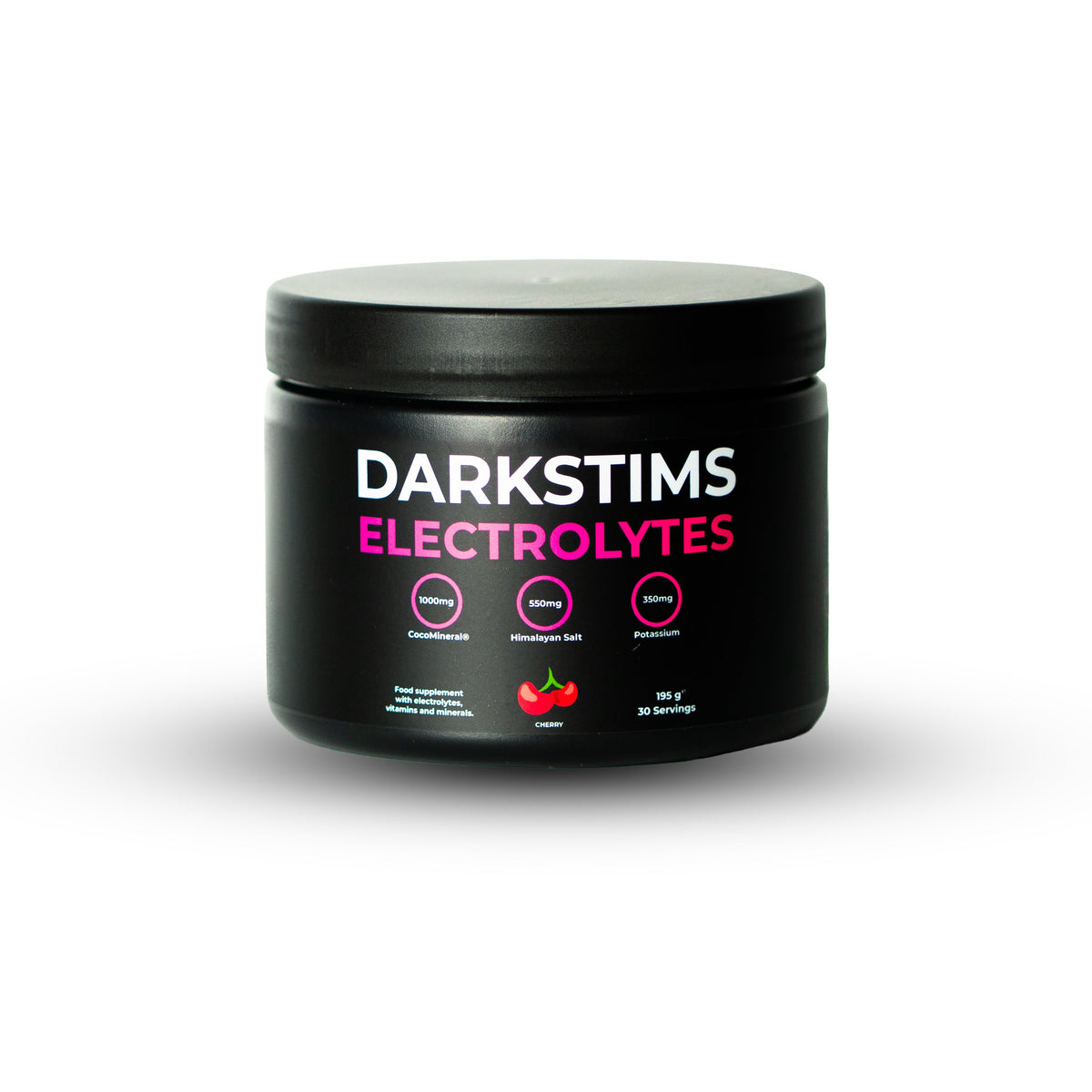
- DARKSTIMS Electrolytes is a caffeine-free hydration powder if you want to add salts to your training drink. Each serving contains 550mg pink Himalayan salt, 350mg tri-potassium citrate, 250mg Aquamin MG, 150mg magnesium bisglycinate, 125mg calcium lactate, 1,000mg coconut water powder, 1,500mg taurine, 250mg vitamin C and 2.5mcg vitamin B12.
FAQ
Is glycerol the same as glycerine?
Yes. Glycerol, glycerine and glycerin are names for the same compound, listed on food labels as E422.
Is glycerol banned in sport?
Not under the WADA Prohibited List since 1 January 2018. Before that it was banned as a masking agent. Always check the current rules for your own sport or federation.
Will glycerol make me gain weight?
It can add temporary water weight, because it helps you hold on to fluid. That is the point of hyperhydration. It is not fat gain, and it passes as your body processes the fluid.
Can I mix glycerol with my pre-workout?
Yes, glycerol is often added to pre-workout drinks. Make sure the total drink has plenty of fluid, and follow the label directions for each product.
Sources
- van Rosendal SP et al. (2010) Guidelines for glycerol use in hyperhydration and rehydration associated with exercise. Sports Medicine.
- Goulet ED et al. (2007) A meta-analysis of the effects of glycerol-induced hyperhydration on fluid retention and endurance performance. IJSNEM.
- Australian Institute of Sport: Glycerol (Group A supplement fact sheet).
- EFSA (2017) Re-evaluation of glycerol (E 422) as a food additive. EFSA Journal.
- USADA: 2018 Prohibited List, summary of major changes (glycerol removed from S5).
- PubChem: Glycerol (compound summary, including density).
DARKSTIMS products are food supplements and should not be used as a substitute for a varied, balanced diet and a healthy lifestyle. Do not exceed the stated serving. Speak to your GP before use if you are pregnant, breastfeeding, under 18, taking medication or have a medical condition.