How to Read a Supplement Label: Doses, Blends and UK Rules
Quick answer: Look for a fully disclosed label that lists every active ingredient with its own dose per serving. Then check how big one serving is and how many servings the tub holds, compare the doses with the amounts used in research, and add up the actual caffeine rather than the weight of a caffeine "blend" or "matrix". In the UK, the label must also call the product a "food supplement", give the recommended daily dose with a warning not to exceed it, and say that supplements are not a substitute for a varied diet.
What a UK supplement label must show
Supplements sold in England are covered by the Food Supplements (England) Regulations 2003, with matching rules in Scotland, Wales and Northern Ireland, plus the general food labelling rules. The Food Standards Agency guidance sums up what has to be on the pack.
| Label element | What the rules require | What to check |
|---|---|---|
| Name | Sold as a "food supplement" | "Dietary supplement" usually means a label written for another market |
| Daily dose | The recommended daily portion, plus a warning not to exceed it | Is a serving one scoop, two, or half a scoop? |
| Active ingredients | The amount of each vitamin, mineral or other substance with a nutritional or physiological effect, per daily portion | Every active ingredient should have its own number |
| Vitamins and minerals | Amounts in set units, with a percentage of the nutrient reference value (%NRV) | Compare %NRV rather than compound weights |
| Ingredients list | All ingredients in descending order of weight, allergens emphasised | What comes first in the list makes up most of the product |
| Statements | Not a substitute for a varied diet; keep out of reach of young children | Missing statements suggest poor compliance |
| Caffeine | A caffeine warning, with caffeine per portion for supplements | The actual caffeine number, not a blend weight |
The ingredients rule comes from Article 18 of the food information regulation. Businesses selling supplements must register as a food business with their local authority, which enforces these rules.
Health claims
Any health claim on a label or website must use wording from the Great Britain nutrition and health claims (NHC) register and meet its conditions. For example, "Creatine increases physical performance in successive bursts of short-term, high intensity exercise" is authorised only for products that provide 3g of creatine a day. Several caffeine performance claims, such as "enhances physical performance", have been assessed and rejected.
Fully disclosed formulas vs proprietary blends
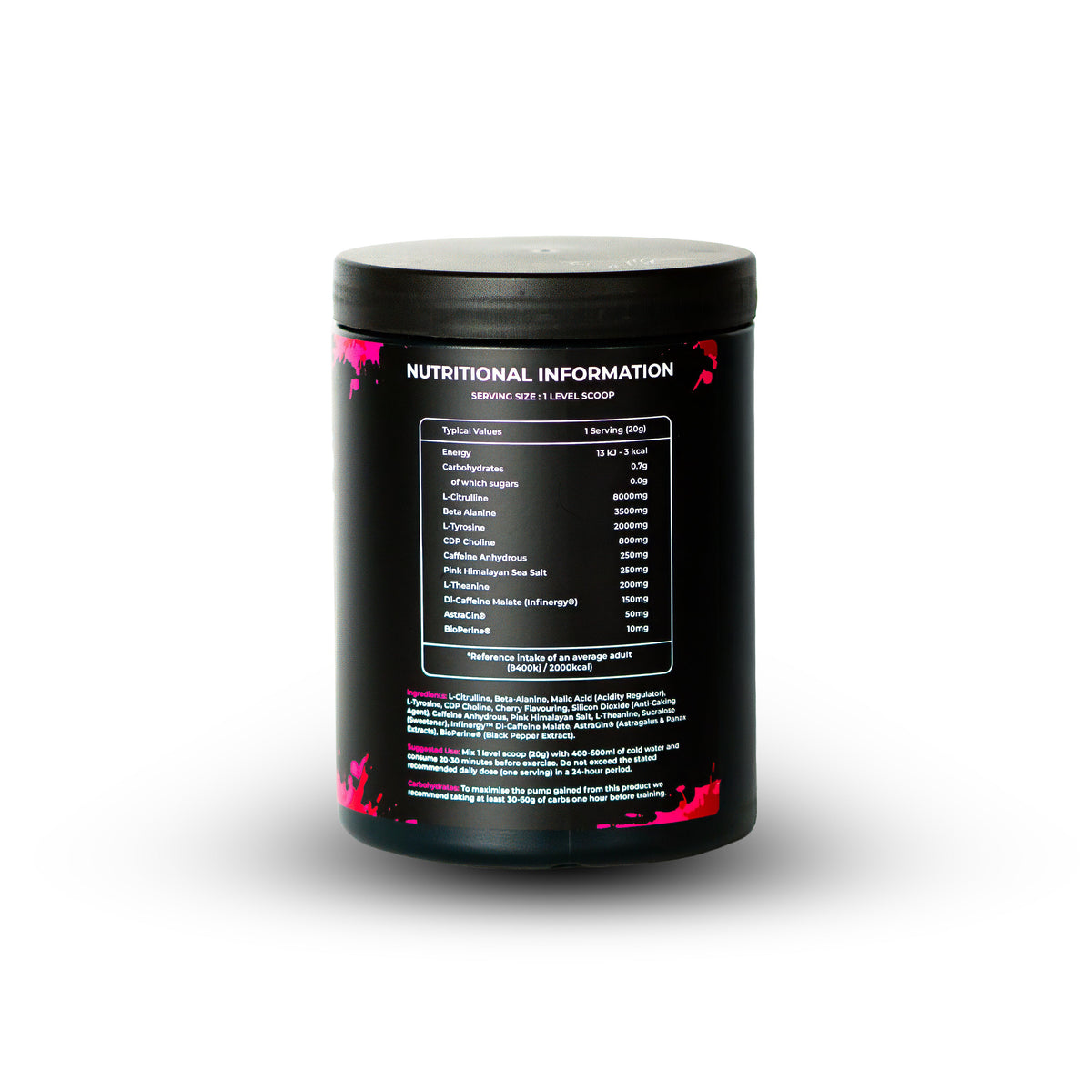
A fully disclosed label gives each ingredient its own dose, for example "L-citrulline 8,000mg, beta-alanine 3,500mg". You can check every number against the research.
A proprietary blend gives one combined weight for a group of ingredients, for example "Performance Matrix 6,000mg: citrulline, beta-alanine, caffeine, tyrosine". The ingredient order tells you which is heaviest, but not by how much. That 6,000mg could be 5,500mg of the cheapest ingredient and a sprinkle of the rest.
UK rules require the amount of each substance with a nutritional or physiological effect to be shown. A label that only gives a blend total tells you less than that, so you cannot judge whether the doses match the research.
Per serving vs per scoop
"Serving" and "scoop" are not always the same thing. Before comparing products:
- Find the serving size in grams. A product that needs two scoops per serving gives half as many servings as the tub suggests at first glance.
- Check the maths. Servings multiplied by serving size should roughly equal the net weight. A 500g tub of 20g servings holds 25 servings.
- Read the right column. Nutrition tables often show "per 100g" and "per serving" side by side. Doses that matter to you are per serving.
Compound weight vs what you actually get
Many ingredients are listed by the weight of a compound, not the active part:
- Minerals: 350mg of tri-potassium citrate is not 350mg of potassium. Check the vitamin and mineral table, which must state the mineral amount and %NRV.
- Citrulline: L-citrulline is pure citrulline. Citrulline malate is citrulline combined with malic acid, so part of the weight is not citrulline. Check which one you are getting and the ratio.
- Caffeine: forms such as di-caffeine malate are only partly caffeine. The label should give the total caffeine figure separately.
What doses to look for
| Ingredient | Dose used in research | Notes |
|---|---|---|
| Creatine monohydrate | 3–5g a day | The authorised GB claim is based on 3g a day; daily use matters more than timing |
| Beta-alanine | 4–6g a day for at least 2–4 weeks | Builds up over weeks; the only reported side effect is tingling, which smaller split doses reduce |
| Caffeine | 3–6mg per kg of bodyweight in performance studies | EFSA safety figures: up to 200mg in one go, 400mg a day from all sources |
| Citrulline | Grams, not milligrams | Check L-citrulline vs citrulline malate |
If a product lists ten ingredients at 50–200mg each, it is unlikely to match the research on any of them.
Adding up your caffeine
The European Food Safety Authority (EFSA) says single doses up to 200mg, and up to 400mg a day from all sources, raise no safety concerns for healthy adults; for pregnant or breastfeeding women the figure is 200mg a day. Performance studies reviewed by the International Society of Sports Nutrition commonly use 3–6mg per kg, but more is not better: very high doses bring more side effects.
- Use the caffeine total, not the blend weight. A 400mg matrix made from 250mg caffeine anhydrous and 150mg di-caffeine malate gives 362.5mg of caffeine, because the di-caffeine malate supplies 112.5mg.
- Count every source. Coffee, energy drinks, caffeinated electrolytes and fat burners all add to the same daily total. A 362.5mg pre-workout plus a 150mg caffeinated drink is 512.5mg, which is over 400mg.
- Know the label wording. Drinks, and powders that make up into drinks, with over 150mg of caffeine per litre must say "High caffeine content. Not recommended for children or pregnant or breast-feeding women". Other foods with added caffeine must say "Contains caffeine. Not recommended for children or pregnant women", and supplements must state the caffeine per recommended daily portion.
How DARKSTIMS labels compare
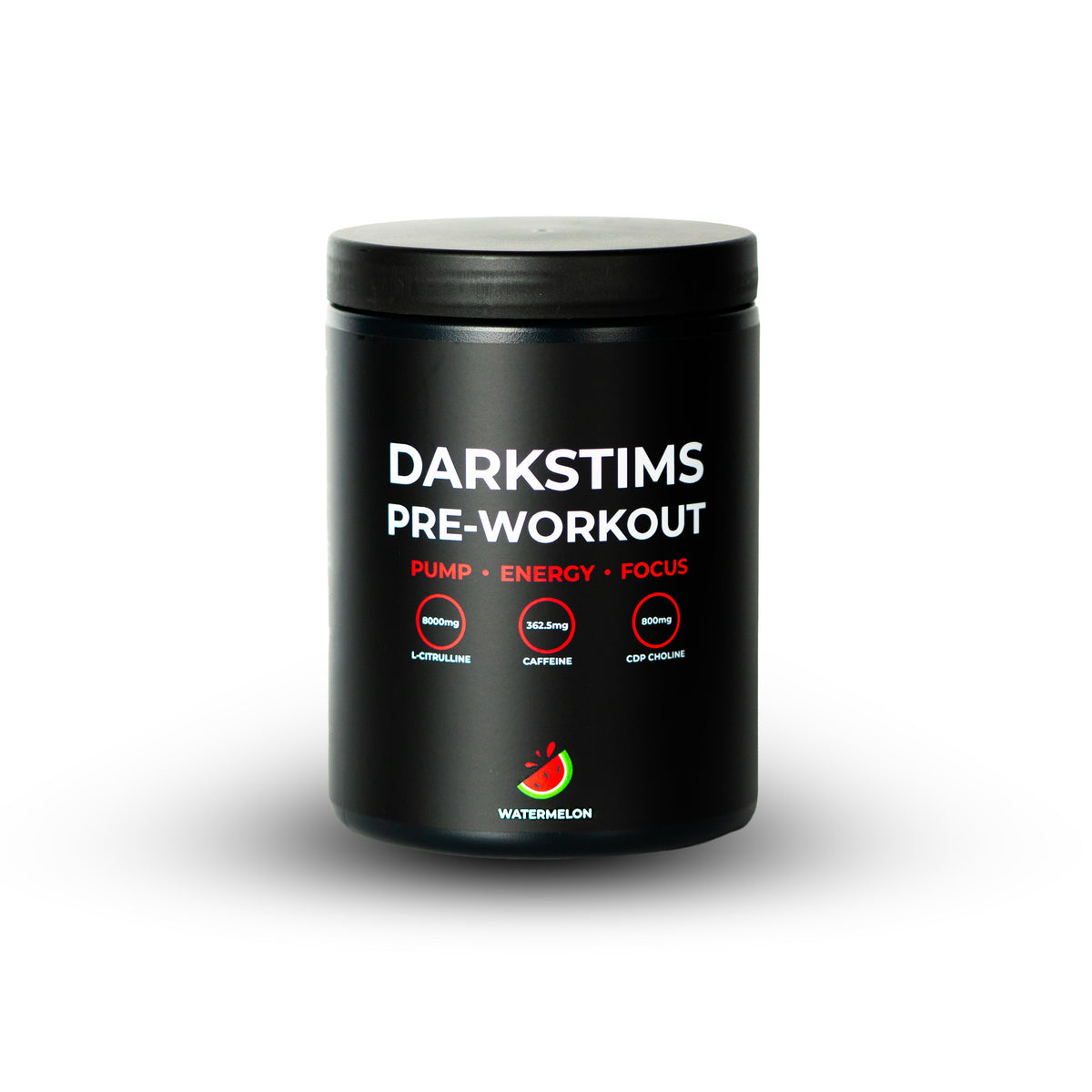
Every DARKSTIMS supplement uses a fully disclosed label with no proprietary blends. PRE V4 lists 8,000mg L-citrulline, 3,500mg beta-alanine, 2,000mg L-tyrosine and 800mg CDP choline per 20g serving (25 servings per 500g tub), with 362.5mg caffeine per serving from a 400mg dual-source caffeine matrix. That is above EFSA's 200mg single-dose figure, so it is for experienced, healthy adults only, one serving a day at most. ULTRA V2 has 500mg caffeine per serving, which is above both EFSA figures; it is only for healthy adults who already use high-caffeine products, and is not for daily use. PUMP V2 has no caffeine: 10,000mg citrulline (8,000mg L-citrulline plus 2,000mg citrulline nitrate), 5,000mg beta-alanine and 4,000mg betaine anhydrous. DARKSTIMS Creatine gives 5g of creatine monohydrate per serving, 100 servings per 500g tub.
FAQ
Are proprietary blends banned in the UK?
UK rules require the amount of each substance with a nutritional or physiological effect to be on the label. Whether a particular label complies is a matter for the local authority. For you as a buyer, a blend that hides individual doses means you cannot check them.
What does %NRV mean?
NRV stands for nutrient reference value, a standard daily reference amount for each vitamin and mineral. For example, the NRV for vitamin C is 80mg, so 250mg is about 312% NRV.
What is the difference between "per serving" and "per 100g"?
UK food supplement rules require amounts per recommended daily portion, so the per-serving column tells you what you actually take. A per-100g column, where shown, helps you compare tubs of different sizes. Always check how many scoops make one serving.
Why does my pre-workout's caffeine not match the matrix number?
Some caffeine forms are only partly caffeine. Count the actual caffeine per serving, which the label should state, towards your daily total.
Sources
- Food Standards Agency. Food supplements: guidance for businesses.
- legislation.gov.uk. The Food Supplements (England) Regulations 2003, regulation 6: labelling.
- legislation.gov.uk. Regulation (EU) No 1169/2011, Annex III: caffeine labelling.
- legislation.gov.uk. Regulation (EU) No 1169/2011, Annex XIII: nutrient reference values.
- GOV.UK. Great Britain nutrition and health claims (NHC) register.
- EFSA. Caffeine: scientific opinion on the safety of caffeine (2015).
- Guest NS et al. (2021). ISSN position stand: caffeine and exercise performance. JISSN.
- Trexler ET et al. (2015). ISSN position stand: beta-alanine. JISSN.
DARKSTIMS supplements are food supplements. Food supplements should not be used as a substitute for a varied, balanced diet and a healthy lifestyle. Do not exceed the stated serving. Speak to your GP before use if you are pregnant, breastfeeding, under 18, taking medication or have a medical condition. Caffeinated products are not suitable for children, pregnant or breastfeeding women or anyone sensitive to caffeine. Never take more than one serving of a pre-workout in 24 hours, and keep your total caffeine from all sources within 400mg a day.